
Jean-Claude Van Damme's "Kickboxer" is being remade, and "The Muscles from Brussels" will be one of the stars.
According to The Hollywood Reporter, 54-year-old Van Damme is in final negotiations to join the cast of the upcoming remake, which will be directed by "Blue Crush" and "Into the Blue" helmer John Stockwell.
The original 1989 "Kickboxer" helped launch Van Damme's career as an action star. He starred in the cult favorite as Kurt Sloane, a young martial artist who travels to Thailand and trains in kickboxing to avenge his brother's vicious loss to a fighter named Tong Po.
This time around, Van Damme will no longer be the student but the master. He's signing on to play an updated take on Master Xian Chow, the role played by Dennis Chan in the original.
"We are so excited to have 'Kickboxer' roll into production and to have (Van Damme) in the role of Master Chow ... to have him lead the franchise to a new generation," one of the remake's producers said in a statement to The Hollywood Reporter.
Stuntman and actor Alain Moussi will star in the new "Kickboxer" as Kurt Sloane, and "Guardians of the Galaxy" star Dave Bautista will portray the new version of Tong Po.
Monday, December 8, 2014
U.S.: Al Qaeda kills hostages during SEALs raid in Yemen
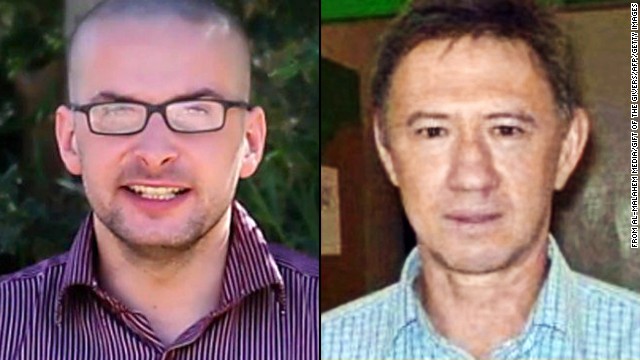
The element of surprise was lost in a failed U.S. military raid to rescue two hostages being held by al Qaeda militants in Yemen, a senior Defense Department official said Saturday.
American photojournalist Luke Somers and South African Pierre Korkie, a "respected teacher" who was to be released on Sunday, were fatally shot in the compound by a terrorist as the secret mission unfolded, a U.S. official said.
The relief group Gift of the Givers, which was helping secure Korkie's release, had recently informed his wife that "the waiting is almost over."
"Three days ago, we told her 'Pierre will be home for Christmas,'" said the group, which identified the South African hostage as Korkie. "We certainly did not mean it in the manner it has unfolded."
He was an "innocent man, a respected teacher," Korkie's wife, Yolande, said in a video made before his death.
U.S. President Barack Obama ordered Friday's mission because "there were compelling reasons to believe Mr. Somers' life was in imminent danger," Defense Secretary Chuck Hagel said.
American hostage pleads for his life Somers' professor: 'Proud' of Luke
A video of Somers pleading for his life was released earlier this week by al Qaeda in the Arabian Peninsula. AQAP gave the U.S. three days to comply with unspecified demands. Time was running out.
Photos: Americans detained abroad Photos: Americans detained abroad
Arrangements for Korkie's release may have been missed by the White House.
The Obama administration assessed that there were two individuals at the location but did not know one was South African or that negotiations were under way for his release, a senior State Department official told CNN.
Korkie and his wife were abducted in May of last year, but AQAP subsequently let his wife go. On Friday, a team of local leaders was finalizing arrangements to reunite Korkie with his wife and children, the relief group said in a statement.
Obama's decision
The President condemned AQAP's killing of the two hostages and explained his decision to authorize the rescue attempt.
"Earlier this week, a video released by his terrorist captors announced that Luke would be killed within 72 hours," Obama said in a statement. "I also authorized the rescue of any other hostages held in the same location as Luke."
Secretary of State John Kerry said in a statement that the President had received a recommendation to authorize the operation.
Obama offered his condolences to Somers' family.
"I also offer my thoughts and prayers to the family of a non-U.S. citizen hostage who was also murdered by these terrorists during the rescue operation," the statement read. "Their despair and sorrow at this time are beyond words."
South Africa's Department of International Relations and Cooperation expressed its "deepest condolences to the family and friends of Mr Korkie for their loss. Condolences are also conveyed to the family and loved ones of the deceased American hostage."
'They lost the element of surprise'
The operation took place Friday at 5 p.m. ET, a U.S. official told CNN.
On Thursday, the Defense Department became aware of enough new intelligence about the location of the hostages to stage a rescue mission, the official said. A senior Defense Department official traveling with Hagel in Afghanistan said that the operation was accelerated because there was intelligence that Somers would be killed on Saturday morning, Eastern time.
Obama and Hagel were briefed the next day.
Two Osprey aircraft transported a team of about three dozen U.S. Navy SEALs, mainly from SEAL Team 6, and a combat medical team near the captives' location. There were no Yemeni forces with the U.S. commandos.
The official traveling with Hagel said that once the Ospreys landed, the team had to trek about 10 kilometers (6 miles) to the compound.
They were discovered about 100 meters from the location where Korkie and Somers were being held, according to that official. The main part of the assault lasted five to 10 minutes.
"They lost the element of surprise at the last minute as they approached the compound," the official said.
It was not clear where the kidnappers were when the firefight started, but the official said that the U.S. is certain that someone ran back inside the compound and shot Korkie and Somers after the battle broke out. The official would not specify how it could be certain of that detail.
Difficult, 'precision' mission
U.S. forces were on the ground for about 30 minutes, an official told CNN. They stayed for that length of time because the combat medical team was trying to stabilize the two wounded hostages.
According to another official, the hostages were loaded onto a plane and flown to a nearby U.S. ship.
One of the hostages died before reaching the ship. The other died afterward.
Drones and fighter jets patrolled overhead during the mission.
The U.S. forces that carried out the mission are safe, a U.S. defense official said. Both the President and Kerry praised their valor.
The hostages were being kept at a location close to one where U.S. and Yemeni forces had carried out a previous raid.
This rescue mission was particularly difficult, due in part to Yemen's sparse population, retired Lt. Col. James Reese, global affairs analyst for CNN, said Saturday.
Reese noted that it would have been difficult for the military to travel a significant distance by air and still maintain the element of surprise in a rescue operation.
"It has to take precision," he said. "This is like brain surgery."
A previous attempt
It was the second such attempt by U.S. forces in two weeks.
In the first attempt, in November, U.S. and Yemeni special forces outfitted with night visors embarked on the mission about a few miles from a cave where AQAP was holding hostages.
A gunbattle ensued, and the special forces killed all seven abductors and freed eight hostages. But the militants had separated Somers and four more hostages from the group and moved them to another location two days before the raid.
This week, AQAP released a video threatening to kill Somers and showing the American photojournalist pleading for his life.
A spokesman read a statement saying Somers would be killed if Washington did not meet the terror group's demands. The spokesman did not name the demands but said the U.S. government knew what they were.
Pleading for his life
Somers' brother and mother posted a response video to YouTube in which they pleaded with the militants to spare him.
"He is not responsible for any actions that the U.S. government has taken. Please understand that we had no prior knowledge of the rescue attempt for Luke, and we mean no harm to anyone," Jordan Somers said.
Paula Somers thanked his captors for taking good care of him, but also asked her son be returned to her alive.
"Please show mercy and give us an opportunity to see our Luke again. He is all that we have," she said.
Tik Root, a former freelance journalist, met Luke Somers when they were both in Yemen.
"Of all the people I met in Yemen, Luke is certainly not the person that should have happened to," Root told CNN. "He was passionate about the country, its people, and he was just a very thoughtful, quirky guy."
Root is now a desk assistant for PBS NewsHour, and he wrote about Somers on Saturday morning on NewsHour's website.
"I didn't know him particularly well but we did cross paths about a dozen times," Root said. "He was really dedicated to Yemen."
Al-Shabaab kills Somali ex-lawmaker, police say
MOGADISHU, Somalia (CNN) -- Gunmen with the Islamist militant group Al-Shabaab killed a Somali former lawmaker and injured a current Parliament member in a drive-by shooting in Somalia's capital Thursday, police said. It marks the third deadly attack attributed to the group in as many days.
The attack in Mogadishu killed former Somali legislator Liibaan Abdullahi. Mustaf Mayow, a current lawmaker, was seriously wounded, police Capt. Muse Farah told CNN.
"Al-Shabaab assailants in a vehicle blocked the (lawmaker's) car," Farah said. "The attackers sped off."
An Al-Shabaab spokesman claimed responsibility for the attack and vowed to carry out similar shootings against Somali lawmakers.
On Wednesday the Al-Shabaab militants attacked a United Nations convoy near Mogadishu's airport killing at least four people, according to police
Three of those killed were civilians and another was a security force member, Police Col. Mohamed Hassan said.
Two United Nations vehicles were damaged, a U.N. official said, but no U.N. staff members were killed or injured in the attack.
The Mogadishu airport also acts as a staging ground for United Nations operations and for the African Union troops on a peacekeeping mission in Somalia.
On Tuesday Al-Shabaab militants raided a quarry in neighboring Kenya, separating non-Muslim workers from their Muslim counterparts and executing them, a spokesman for the group said Tuesday.
At least 36 bodies were found dumped in the quarry in the village of Kormey, near the Somali border, the Kenyan Red Cross said.
Al-Shabaab said the attack was retaliation for mosque raids that Kenyan security forces carried out last month to weed out extremists.
The group has been active in East Africa for years, waging an armed campaign that initially aimed to turn Somalia into a fundamentalist Islamic state, according to the Council on Foreign Relations.
Uganda maid admits torturing toddler after secret filming
The courtroom was packed as Jolly Tumuhirwe asked for forgiveness
A maid in Uganda who was secretly filmed beating and kicking a toddler has pleaded guilty to torture. Jolly Tumuhirwe, 22, was charged in court with the torture of a girl of 18 months. A video of the assault caused outrage when it was posted online. The child's father, Eric Kamanzi, had installed a camera in his home after noticing his daughter was bruised and limping. Ms Tumuhirwe asked the court, the parents and Ugandans to forgive her. The graphic footage, which is taken from a camera hidden in the corner of the living room, shows Ms Tumuhirwe hitting the child when she resists feeding and then throwing her to the floor, beating her with a torch before stepping on her and kicking her. No lawyer The footage of the abuse has been seen or shared thousands of times on social media.
The child's father, Eric Kamanzi , had installed a secret camera in the living room to capture the abuse
Mr Kamanzi was in court and later became emotional when Ms Tumuhirwe said she was sorry
After capturing the violence on film, the girl's father reported the incident to police on 13 November. Ms Tumuhirwe, who was not represented by a lawyer in court, now faces up to 15 years in prison for the crime or a fine of about $400 (£260) or both. One of Uganda's leading advocates offered to represent her but the magistrate denied his request saying he had not formally notified the court. The BBC's Patience Atuhaire in the capital, Kampala, says the toddler's father broke down in court when the maid said she was sorry. The magistrate granted the state attorney's request for an adjournment of two days so that she could gather more facts on the case. After the public outrage that followed the video, police had issued a statement saying the charge of torture would be amended to attempted murder. But the directorate of public prosecutions was quoted in local media on Monday as saying that investigations were still on-going and the charge remained torture under the Anti-Torture Act. Our reporter says the courtroom was packed and people were running and craning their necks to have a good look at Ms Tumuhirwe as she was led away by prison officers after the session.
A maid in Uganda who was secretly filmed beating and kicking a toddler has pleaded guilty to torture. Jolly Tumuhirwe, 22, was charged in court with the torture of a girl of 18 months. A video of the assault caused outrage when it was posted online. The child's father, Eric Kamanzi, had installed a camera in his home after noticing his daughter was bruised and limping. Ms Tumuhirwe asked the court, the parents and Ugandans to forgive her. The graphic footage, which is taken from a camera hidden in the corner of the living room, shows Ms Tumuhirwe hitting the child when she resists feeding and then throwing her to the floor, beating her with a torch before stepping on her and kicking her. No lawyer The footage of the abuse has been seen or shared thousands of times on social media.
The child's father, Eric Kamanzi , had installed a secret camera in the living room to capture the abuse
Mr Kamanzi was in court and later became emotional when Ms Tumuhirwe said she was sorry
After capturing the violence on film, the girl's father reported the incident to police on 13 November. Ms Tumuhirwe, who was not represented by a lawyer in court, now faces up to 15 years in prison for the crime or a fine of about $400 (£260) or both. One of Uganda's leading advocates offered to represent her but the magistrate denied his request saying he had not formally notified the court. The BBC's Patience Atuhaire in the capital, Kampala, says the toddler's father broke down in court when the maid said she was sorry. The magistrate granted the state attorney's request for an adjournment of two days so that she could gather more facts on the case. After the public outrage that followed the video, police had issued a statement saying the charge of torture would be amended to attempted murder. But the directorate of public prosecutions was quoted in local media on Monday as saying that investigations were still on-going and the charge remained torture under the Anti-Torture Act. Our reporter says the courtroom was packed and people were running and craning their necks to have a good look at Ms Tumuhirwe as she was led away by prison officers after the session.
China trade data well below expectations
China's imports fell surprisingly in November, showing weak domestic demand
Trade data from the world's second largest economy, China, came in well below expectations on Monday, heightening fears of a sharper slowdown. China's exports rose 4.7% in November from a year ago, compared to market forecasts of a 8.2% jump. Imports fell 6.7% in the same period against predictions of a 3.9% rise. The surprise slump in imports led the trade surplus to hit a record $54.5bn (£35bn), the highest in 14 years. While the trade surplus, which is up 61% compared to last year, will add to economic growth in the fourth quarter, it does suggest the government needs to step in to stimulate growth, said Dariusz Kowalczyk, economist at Credit Agricole. "[Imports fall] is partly a reflection of lower commodity prices and base effects, but these two factors cannot fully explain the weak import number and we have to assume that poor domestic demand has played a part," he said. "We expect a reserve requirement ratio cut in December, introduction of reverse repos this week, and another rate cut in the first quarter." In October, exports grew by 11.6%, while imports were higher at 4.6%. China's economic growth had slowed to 7.3% in the third quarter, marking its weakest quarter since the global financial crisis as a cooling property market and tighter credit conditions weighed on growth. Economists had been calling for stimulus measures from the government and the central bank did unexpectedly cut interest rates for the first time in over two years last month to spur activity.
Sunday, December 7, 2014
Liberia court lifts order suspending election campaign due to Ebola
Dec 7 (Reuters) - Liberia's Supreme Court on Sunday lifted a government order suspending campaigning in and around the capital for next week's Senate election imposed on the grounds that electioneering risks spreading the Ebola virus.
Liberia is the country hardest hit by the epidemic and has recorded more than 3,000 deaths out of a total from Liberia, Sierra Leone and Guinea of 6,055 victims, according to World Health Organization figures on Wednesday.
The country's epidemic is gradually being brought under control, but the toll has damaged healthcare and has caused a delay in Senate elections which had been set for October in a country that emerged from a long civil war in 2003.
President Ellen Johnson Sirleaf's government imposed the executive order last week banning the holding of political rallies in Montserrado County, which includes the capital, because the area has been hard hit by Ebola.
It was contested by her son Robert Sirleaf who is running as an independent candidate for Senate. He appealed for a temporary lifting of the ban, arguing that to stop campaigning in just one part of the country is discriminatory.
The younger Sirleaf is one of the president's leading advisers and analysts say he is seeking an independent political base ahead of elections in 2017 when the president must step down due to a two-term limit.
Presiding Associate Justice Philip Banks issued Sunday's Supreme Court ruling, Minister of Information Lewis Brown said on national ELBC radio.
"The government intends, in keeping with its long-held tradition of respect for the various authorities and democratic actions of each branch of government, to honour this order of the Supreme Court," Brown said.
The court will hear a petition on Monday by some political parties, civil society groups and others to postpone national Senate polls from Dec. 16 until Ebola is eradicated. It will also hear Robert Sirleaf's petition on Wednesday, Brown said.
The initial Senate elections set for October were delayed at the height of the outbreak in Liberia.
Lupita Nyong'o: 'I haven't figured out how to be a celebrity'

Lupita Nyong'o is one of Glamour magazine's Women of the Year. That's no surprise to most people: The actress won an Oscar for "12 Years a Slave" this year and has been popping up on "best dressed" and "most beautiful" lists ever since.
Nevertheless, she tells the magazine that the attention she's received has been overwhelming. "Right now I'm still adjusting. I guess I feel catapulted into a different place; I have a little whiplash," she said. "I did have a dream to be an actress, but I didn't think about being famous. And I haven't yet figured out how to be a celebrity; that's something I'm learning, and I wish there were a course on how to handle it." She couldn't even imagine what winning the Oscar would be like, she observed. "I don't think I will ever be able to really articulate how bizarre it was to hear my name at the Academy Awards. I'd watched in my pajamas the year before!" she said. "I felt numb -- dazed and confused. I remember feeling light -- weightless. More like limbo than cloud nine." The Oscar has helped launch her career into the stratosphere. Nyong'o has big things ahead, including next year's "Star Wars" movie. But the actress, who was born in Mexico of Kenyan parents, mentions that it wasn't always so. For her, Oprah Winfrey wasn't just a role model but a "reference point," and seeing Winfrey and Whoopi Goldberg in "The Color Purple" was key to her belief that she could become successful. She hopes she can have the same effect on people who see her. "I've heard people talk about images in popular culture changing, and that makes me feel great, because it means that the little girl I was, once upon a time, has an image to instill in her that she is beautiful, that she is worthy," she said. "Until I saw people who looked like me, doing the things I wanted to, I wasn't so sure it was a possibility."
Who works the longest hours?
Chill winds sweeping the world economy have left many people out of a job, and some of those still working have been asked to worker longer hours for the same pay. Recently the UK government urged the country to work harder, after slipping back into recession. So which countries put the most hours in?
A look at the average annual hours worked per person in selected countries puts South Korea top with a whopping 2,193 hours, followed by Chile on 2,068.
British workers clock up 1,647 hours and Germans 1,408 - putting them at the bottom of the table, above only the Netherlands.
Greek workers have had a bad press recently but, as we reported in February, they work longer hours than any other Europeans. Their average of 2,017 hours a year puts them third in the international ranking, based on figures compiled by the Organisation for Economic Co-operation and Development (OECD).
Workers are generally given paid annual leave and paid public holidays
In many countries, though not the US, a minimum amount of paid leave is guaranteed by law
In European Union countries this minimum ranges from 20 to 25 days, but in practice the figure is often higher - in Germany and Denmark the average was 30 days in 2010
Public holidays in the EU vary from five in the Netherlands, to 14 in Spain (2010 figures) - in England and Wales there are eight in a normal year, in Scotland nine, and in Northern Ireland 10
Workers in the US are given an average of nine days of paid leave and six paid public holidays (2006 figures)
Not all employees take the paid leave they are entitled to - Japanese workers were given 18 days on average in 2010, but took less than half of it
Source: European Industrial Relations Observatory; Center for Economic and Policy Research; Japan Institute for Labour Policy and Training
Would more holiday be good for America?
How hard do you work?
It's worth mentioning that the OECD has only 34 members - most of them developed countries - and some very important countries, such as India, China and Brazil, are not among them.
The OECD data includes full and part-time salaried workers and the self-employed. It includes all the hours they work, including overtime.
While figures are available for some other parts of the world, they are not directly comparable to the OECD data because they are collated very differently or they are out of date, so we are focusing only on the OECD nations.
But by looking at data from the OECD and the International Labour Organization (ILO) we can see some broad and interesting trends.
"Asian countries tend to work the longest [hours], they also have the highest proportion of workers that are working excessively long hours of more than 48 hours a week," says Jon Messenger, an ILO expert on working hours.
"Korea sticks out because it's a developed country that's working long hours," he says. "Normally it's developing countries like Bangladesh, Malaysia, Thailand, Sri Lanka - countries like this that are working long hours."
But working longer doesn't necessarily mean working better.
"Generally speaking, long working hours are associated with lower productivity per hour. Workers are working very long hours to achieve a minimum level of output or to achieve some minimum level of wages because frankly they're not very productive," Messenger says.
The picture is very different in the developed world, where working hours have been falling.
"Over the last century, you've seen a reduction from very long working hours - nearly 3,000 a year at the beginning of the 1900s - to the turn of the 21st Century when most developing countries were under 1,800 hours," says Messenger. "And indeed some of the most productive countries were even lower than that."
The drop in working hours is in part a reflection of the greater number of part-time workers in the developed world. A large number of part-time workers brings down a country's average - in the case of Japan, for example, a high proportion of people work excessive hours, but many also work part-time, leaving the country in the middle of the table, with 1,700 hours.
"You have more and more people working part-time hours," says Messenger. "They're quite capable of supporting themselves, quite capable of producing what they need to produce, so it's just not necessary to work longer than that."
Tighter labour laws in developed countries, particularly in Europe, have also reduced working hours. The differences between the most developed nations are small but leave entitlement makes a difference.
Messenger says the average Briton works 150 fewer hours than an American.
"The difference is really driven by the fact that the US is the only developed country that has no legal or contractual or collective requirement to provide any minimum amount of annual leave," he says.
The UK, in contrast, is subject to the European working time directive, which requires at least four weeks of paid annual leave for every employee.
Some European countries have a higher statutory level of paid leave - 25 days in Austria, Denmark, France, Italy, Luxembourg and Sweden in 2010, according to the European Industrial Relations Observatory (Eiro). And some employers provide more paid leave than the statutory miniumum.
Paid public holidays, which come on top of that, averaged between nine and 10 in the European Union in 2010.
"The combined total of agreed annual leave and public holidays varied in the EU from 40 days in Germany and Denmark to 27 days in Romania - a difference of around 48% or 2.5 working weeks," Eiro said in a report published last year.
When comparing hours worked, however, there's one more thing which must be acknowledged.
Each country collects its own data, and their methods may be not always be perfectly comparable.
Pakistan Taliban chief Latif Mehsud 'repatriated'
A senior Pakistani Taliban commander, Latif Mehsud, has reportedly been handed over to Pakistan by the US from Afghanistan.
The US military confirmed it "transferred custody" of three Pakistanis, but did not reveal their identities.
The Afghan government was not involved in the transfer, the US said.
Correspondents say the repatriation of a senior Taliban figure is extremely unusual.
It could relate to attempts to improve Afghanistan-Pakistan ties, they say.
Secret flight
While the US did not confirm Latif Mehsud was among those transferred, Pakistani officials said Latif Mehsud had been "released".
Several senior officials said that the commander had been secretly flown to Pakistan earlier this week.
The identity of the other two men is not yet known. The three men had been held by the US at Bagram airbase in Afghanistan.
The office of the US Forces in Afghanistan said that the transfer took pace after talks between the US and Pakistan.
"In making a decision to transfer a detainee, we take into account the totality of relevant factors relating to the individual and the government that may receive him, including but not limited to any diplomatic assurances that have been provided," the US military said in a statement.
Warming in relations
Latif Mehsud was second-in-command to the former Pakistan Taliban chief Hakimullah Mehsud, who was killed in a US drone strike last year.
He was seized by the Afghan army in October 2013 in eastern Afghanistan, close to the Pakistani border, then held by US forces at Bagram airbase.
Pakistani Taliban fighters. File photo
The Pakistani Taliban has been fighting the Islamabad government since 2007
There were unconfirmed reports at the time that he was returning from talks over a mooted prisoner swap deal, and his capture is said to have angered then-Afghan President Hamid Karzai.
The latest development is leading to speculation that such exchanges could be in prospect now, reports the BBC's Mike Wooldridge in Kabul.
There does currently appear to be some warming in relations between Afghanistan and Pakistan, which have repeatedly accused one another of failing to act against cross-border militancy, our correspondent says.
Meanwhile, Afghanistan's new President Ashraf Ghani has said he is committed to striving for a peaceful solution to the conflict with the Taliban.
Taliban prisoners have been freed in the past in a bid to help peace efforts.
Pakistan's government entered talks with the Tehreek-e-Taliban Pakistan (TTP) in February.
The hardline Islamist movement has been waging its own insurgency against the Islamabad government since 2007, leaving tens of thousands of people dead.
The mind-bending effects of feeling two hearts
Every second or so, Carlos would feel a small “bump” hitting his tummy. It was the beating of his “second heart”.
The small mechanical pump was meant to relieve the burden of his failing cardiac muscles, but Carlos (not his real name) disliked the sensation. The beat of the machine seemed to replace his pulse, a sensation that warped his body image: as the device throbbed above his navel, Carlos had the eerie feeling that his chest had dropped into the abdomen.
It was a strange, unsettling feeling. But when neuroscientist Agustin Ibanez met Carlos, he suspected even odder effects were to come. By changing the man’s heart, Ibanez thought, the doctors might have also changed their patient’s mind: Carlos would now think, feel and act differently as a result of the implant.
How come? We often talk about “following the heart”, but it is only recently that scientists have begun to show that there is literal truth in the cliche; the heaving lump of muscle contributes to our emotions and the mysterious feelings of “intuition” in a very real way. Everything from your empathy for another person’s pain to the hunch that your spouse is having an affair may originate from subtle signals in your heart and the rest of your body.
And the man who feels two hearts offered Ibanez, who is based at Favaloro University in Buenos Aires, a unique opportunity to test those ideas.
Ibanez’s work chimes with millennia of speculation about the heart’s role in cognition – which was sometimes thought to supersede the brain’s. Touching the cool, moist grey matter of the cortex, for instance, Aristotle assumed that the brain’s main function was to chill the passions erupting from the heart – which he considered the seat of the soul. For similar reasons, embalmers in ancient Egyptians made sure to leave the heart in the chest, but happily removed the mere “cranial stuffing” from the head.
We now take a more cerebral view of thought, even if the view of the heart as the font of our emotions has lingered; just consider the many metaphors we use to describe feelings today. William James, the founder of modern psychology, helped formalise these ideas in the 19th Century by suggesting that emotions are really a back-and-forth feedback cycle between the body and the brain. According to his theory, the brain might be able to register a threat intellectually – but it is our awareness of the racing heartbeat and sweaty palms that transforms an abstract concept into a visceral emotion.
James’ ideas also raised an important question: if everybody has different bodily awareness, would that shape the emotions they experience? The idea was difficult to test, however, but a hundred years later scientists are now on the case.
The studies first asked subjects to count their heartbeats based solely on the feelings within their chest; they weren’t allowed to put their hand on their heart or actively take their pulse. Try it for yourself, and you’ll see that this kind of “interoception” can be surprisingly difficult; around one in four people miss the mark by about 50%, suggesting they have little to no perception of the movements inside them; only a quarter get 80% accuracy. After testing their cardiac awareness, the researchers then gave the volunteers various cognitive tests.
James, it turned out, was spot on. People with more bodily awareness tend have more intense reactions to emotive pictures and report being more greatly moved by them; they are also better at describing their feelings. Importantly, this sensitivity seems to extend to others’ feelings – they are better at recognising emotions in others’ faces – and they are also quicker to learn to avoid a threat, such as a small electric shock in the lab, perhaps because those more intense bodily feelings saturate their memories, making the aversion more visceral. “It may quickly clue us in to the relative goodness or badness of the objects, choices, or avenues of action that we are facing,” says Daniella Furman at the University of California, Berkeley. In other words, people who are in tune with their bodies have a richer, more vivid emotional life – including both the ups and downs of life. “We may not be able to describe the particular physiological signature of a pleasurable experience, but we would probably recognise the sensations when they occur,” she says.
These secret bodily signals may also lie behind our intuition – the indefinable hunches that you have the winning hand in poker, say, according to an elegant study by Barney Dunn at the University of Exeter. The task was simple: the volunteers were asked to choose cards from four decks, and they would win money if it matched the colour of another, upturned card.
The game was rigged so that you were slightly more likely to win from two of the decks, and lose if you picked from the other two. Dunn found that the people who could track their heartbeat with the most accuracy would tend to pick from certain decks, whereas those with poor interoception were more likely to choose at random.
The bodily-aware people weren’t always correct – they were the worst losers as well as the best winners – but the point was that they were more likely to follow their hunches.
So the folklore may be right: people who are in touch with their heart are more likely to be swayed by their instincts – for good or bad. All of which prompted Ibanez to wonder what would happen when you are fitted with an artificial heart? If Carlos experienced substantial changes, it would offer important new evidence that our mind extends well beyond the brain.
And that is exactly what he found. When Carlos tapped out his pulse, for instance, he followed the machine’s rhythms rather than his own heartbeat. The fact that this also changed other perceptions of his body – seeming to expand the size of his chest, for instance – is perhaps to be expected; in some ways, changing the position of the heart was creating a sensation not unlike the famous “rubber hand illusion”. But crucially, it also seemed to have markedly altered certain social and emotional skills. Carlos seemed to lack empathy when he viewed pictures of people having a painful accident, for instance. He also had more general problems with his ability to read other’s motives, and, crucially, intuitive decision making – all of which is in line with the idea that the body rules emotional cognition. “It is a very interesting, very intriguing study,” says Dunn of the findings.
“A lifeless shell”
Sadly, Carlos died from complications during later treatments – but Ibanez now hopes to continue his studies with other patients. He is currently performing tests on people undergoing a full heart transplant to see how it could influence interoception. Damage to the vagal nerve should cut off some of the internal signals sent from the heart to the brain, which might then impact their cognition.
Away from the cardiac clinic, he has is also looking at whether a fault in the link between body and brain could lead to strange depersonalisation disorders, in which patients have the eerie feeling that they don’t inhabit their own body. “I feel as though I'm not alive, as though my body is an empty, lifeless shell,” one patient told researchers. “I seem to be walking in a world I recognise but don't feel.” Ibanez has found that they tend to show worse interoception, and brain scans suggest that this results from a breakdown in communication across the anterior insula – a deep fold of the cortex that is, tellingly, implicated in body awareness, emotion perception, empathy, decision making – and the sense of self.
Dunn, who is a clinical psychologist, is more concerned about its relevance to depression. “At the moment therapy is very much in the head – we change what the client thinks and trust that their emotions will follow up,” he says. “But I often hit a wall: they say that they know these things intellectually, but emotionally they can’t feel it.”
Even after therapy has trained more positive thinking, the patient may still struggle to feel joy, for example – a problem that Dunn suspects may come from poor interoception. He gives the example that when you are walking around the park, your body might give you all sorts of pleasant feedback that shows you are relaxed and peaceful. “But depressed clients seem to walk around the park without being engaged with the sensory experience,” he says, “and then they come back and say it was flat and empty”.
Along these lines, Furman has found that people with major depressive disorder (but without other complications like anxiety) struggle to feel their own heart beat; and the poorer their awareness, the less likely they were to report positive experiences in their daily life. And as Dunn’s work on decision making would have suggested, poor body perception also seemed to be linked to measures of indecision – a problem that blights many people with depression. Furman stresses, however, that there may be many different kinds of depression, and poor bodily awareness may only influence some of them.
It’s not clear why some people may have reduced bodily awareness, but Dunn thinks it can be trained, with practice. He is currently looking into the use of mindfulness-based therapy, which encourages people to focus on the sensations in their body. He says the challenge is to try to recognise the feelings, even if they are unpleasant, without reacting to them in a knee-jerk way. You should then be better equipped to use the body as the “emotional barometer” to inform you about your state of mind and decide how to act. Another group has designed a rudimentary computer game that asks you to tap a key with every four heartbeats, and flashes red when you are wrong, offering feedback that should boost body awareness.
So what are you waiting for? You can enjoy a richer, more emotional life; tune into the sensory pleasures of the world, and make better decisions. And all you have to do is listen to your heart.
Putin expresses hope for permanent Ukraine ceasefire
Russian President Vladimir Putin has said he hopes a permanent ceasefire will soon be agreed in Ukraine, after talks in Moscow with French counterpart Francois Hollande. Mr Hollande is the first Western leader to visit Russia since the start of the Ukraine crisis earlier this year. A ceasefire was signed in September but there have been constant breaches. Russia has been angered by Western sanctions imposed for its support of pro-Moscow rebels in eastern Ukraine. Mr Hollande made his unscheduled stop in Moscow on his way back from a visit to Kazakhstan and met Mr Putin in the diplomatic terminal of Vnukovo airport, south-west of the capital. Mr Putin said they had held detailed discussions on ending the violence in Ukraine. "It is a tragic situation. We can see that people are still getting killed," he said. "But I hope that a final decision will be reached soon to cease fire. We have just discussed this in great detail with the French president. Ukrainian troops fire mortars at pro-Russian separatists at the village of Pisky near Donetsk airport. 5 Dec 2014 Fighting has continued in parts of eastern Ukraine, despite the ceasefire Mr Hollande urged all parties to respect the truce deal, signed in Minsk, Belarus, on 5 September. "France's role is to search for solutions and prevent problems from degenerating," he said. "I wanted today, alongside President Putin, to send a message of de-escalation. Today that message is possible." Mr Putin told journalists afterwards that he and Mr Hollande had not discussed the delayed delivery of two French warships for the Russian navy. But he said he expected France to return the money that Russia had paid so far for the vessels. Meanwhile in the Ukrainian capital Kiev, President Petro Poroshenko said new talks were planned on Tuesday on implementing the steps agreed under the shaky ceasefire. He said that the two sides meeting in Belarus would try to "confirm the timetable for implementing the (original) Minsk agreements". More than 4,300 people have died and almost one million have been displaced, the UN says, since the crisis in Ukraine began in April. line
Saturday, December 6, 2014
US adds 321,000 jobs in November
The US economy added 321,000 jobs in November, while the unemployment rate stayed at 5.8%, official Labor Department figures show. The number of jobs created was well above analysts' forecasts of about 225,000 new jobs in the month. US employers have added at least 200,000 jobs for 10 months in a row, the longest period of jobs growth since 1995. The number of jobs created has averaged 241,000 a month this year. The Labor Department added that 44,000 more jobs were created in September and October combined than the government had previously estimated. But as in the UK, stronger job creation has yet to lead to a significant increase in salaries. Analysts said the US economy would continue to improve, despite lower global growth expectations. They added that companies hiring temporary workers for the winter holidays could be providing a boost to the overall jobs figure, The US economy is less dependent on exports than Germany, China and Japan, but is more reliant on domestic consumer spending. Delivery firms have announced ambitious recruitment plans. UPS has said it expects to add up to 95,000 seasonal workers, up from 85,000 last year. FedEx plans to hire 50,000, up from 40,000. The National Retail Federation estimates that seasonal retail hiring could grow by about 4% to as much as 800,000. Most recent figures suggest Americans are buying more cars, which is likely to keep factories busy in coming months. Auto sales last month rose to their second-fastest pace this year. Car sales are on track to rise 6% this year from 2013. The economy is expected to slow in the final three months of the year to an annualised growth rate of 2.5%, down from 4.3% from April to September. Meanwhile, the US trade deficit fell slightly in October, as exports rebounded, while oil imports dipped to the lowest level in five years. The deficit edged down 0.4% to $43.4bn, as against a revised $43.6bn in September, the Commerce Department reported. Exports climbed 1.2% to $197.5bn, recovering after a September dip. Imports also rose by 0.9% to $241bn, but that increase was tempered by a 0.6% fall in imports of petroleum, which dropped to the lowest level since November 2009.
Thursday, December 4, 2014
James Bond Spectre: Lea Seydoux and Monica Bellucci to play leading ladies
Dave M. Benett/WireImage Monica Bellucci, Lea Seydoux and Naomie Harris to star in new Bond film 'Spectre'
Monica, Lea and Naomie
Sam Mendes has revealed the cast of the new James Bond film, which sees Daniel Craig reprise his role as 007.
Speaking at a press conference held at Pinewood Studios earlier today, the director announced the title Spectre - Special Executor for Counter-Intelligence, Terrorism, Revenge and Extortion - and who will be making a return to the film and who fans of the franchise will be seeing for the very first time.
Lea Seydoux
The French actress, who earned critical acclaim for Blue is the Warmest Colour last year, won over director Sam Mendes and producers Barbara Broccoli and Michael G. Wilson, who were originally planning to cast a Scandinavian star in the film but changed their minds in favour of the Parisian beauty.
She started off her career in French cinema, appearing in films such as The Last Mistress and On War, before going on to star in major Hollywood blockbusters, including Inglorious Basterds, Robin Hood and Mission Impossible: Ghost Protocol.
When not starring on the big screen, she can be seen in the ads for Prada fragrance Candy.
Lea, 29, will play Madeleine Swann.
Monica Bellucci
The Italian actress and model, 50, screen tested for 1997 Bond film Tomorrow Never Dies, but lost out to Terri Hatcher.
Almost 20 years later, she will take on the role of Lucia Sciarra.
Monica, who has two children with French actor Vincent Cassel, has starred in countless films, including The Brothers Grimm, Malena, Brotherhood of the Wolf and The Passion of the Christ.
Naomie Harris
The British actress, who starred alongside Craig in SkyFall, will return as Eve Moneypenny. Speaking about her role, she said: "The producers and Sam [Mendes] said they wanted to make a real distinction between this Bond Girl… Woman, and the ones of the past.
"One of the things Sam said was, 'I want you to represent the modern woman. I want women to be able to feel that they respect you, admire you and that you’re just as capable as Bond."
Elsewhere, Sherlock's Andrew Scott, Guardians of Galaxy star Dave Bautista and Christoph Waltz will all join the cast.
Andrew Scott will play a Whitehall-based character (who turns to the dark side?) while Bautista will play henchman Mr Hinx.
Ralph Fiennes, Ben Whishaw and Rory Kinnear will also all reprise their roles.
The official plot summary reads: "A cryptic message from Bond’s past sends him on a trail to uncover a sinister organisation. While M battles political forces to keep the secret service alive, Bond peels back the layers of deceit to reveal the terrible truth behind SPECTRE."
The film is due to hit cinemas on November 6, 2015.
Orion 'Mars ship' launch postponed
Thursday's first test flight of the US space agency's Orion "Mars ship" has been postponed because of weather and technical issues.
The capsule had been due to launch atop a Delta rocket on a short journey above the Earth to prove key technologies.
Its maiden voyage was to have taken place from Cape Canaveral in Florida between 12:05 GMT and 14:44 GMT.
But the countdown was interrupted by gusty winds and by sluggish fuel valves.
Engineers will try again on Friday. The launch window will be exactly the same as on Thursday, with the aim as ever to try to get away right at the start of the window at 12:05 GMT (07:05 local Florida time).
"We'll go make sure we've got a happy rocket and as soon as we do that we're going to get back to the pad and send Orion off to a very, very successful test flight," said Dan Collins from the Delta's operating company, United Launch Alliance.
The conical capsule is reminiscent of the Apollo command ships that took men to the Moon in the 1960s and 1970s, but bigger and with cutting-edge systems.
The first two delays on Thursday were weather-related (although a cargo ship travelling close to the launch range was a concern for a period, also). Sensors detected unacceptably strong gusts of wind in the vicinity of the rocket at ground level, and this automatically stopped the countdown clock. A third stop on the clock was caused by sticky fill/drain valves on the rocket's big boosters. These had become excessively cold in the presence of the Delta's liquid hydrogen propellant. Lockheed Martin, the company developing Orion and running this test flight for Nasa, has another two days to get the mission off the ground before negotiations must take place for an extension. Other space missions have bookings on the launch complex and they would have to agree to step back, potentially delaying their operations as well. And ULA has a lift-off to manage on the West Coast of the US next week, and this could be impacted if the company's staff are detained in Florida. Unfortunately, the weather in some respects looks to be less favourable for a Friday attempt. If it deteriorates further, a decision could be made simply to jump to Saturday. This would save on supplies of liquid hydrogen, some of which is lost every time the rocket is tanked up, while also giving launch crews a bit of rest. 'Big thing' Orion is being developed alongside a powerful new rocket that will have its own debut in 2017 or 2018. Together, they will form the core capabilities needed to send humans beyond the International Space Station to destinations such as the Red Planet. For the time being, the Delta IV-Heavy rocket - currently the beefiest launcher in the world - is being used as a stand-in. The animation shows how the maiden test voyage of Orion should progress If all goes well on Friday, the Delta will send Orion twice around the globe, throwing the ship up to an altitude of almost 6,000km (3,600 miles). This will set up a fast fall back to Earth, with a re-entry speed into the atmosphere close to 30,000km/h (20,000mph) - near what would be expected of a capsule coming back from the Moon. It should give engineers the opportunity to check the performance of Orion's critical heat shield, which is likely to experience temperatures in excess of 2,000C (4,000F). They will also watch how the parachutes deploy as they gently lower the capsule into Pacific waters off Mexico's Baja California Peninsula.
Zimbabwe's Mugabe anger over Joyce Mujuru 'death plot'
Zimbabwe's president has spoken of his anger that his embattled deputy Joyce Mujuru allegedly plotted to assassinate him and accused her of being a thief.
Speaking at the ruling Zanu-PF party's congress, Robert Mugabe said he would act against all corrupt officials.
Mrs Mujuru's absence from the congress showed she was "scared", he added.
Recently expelled Zanu-PF member Rugare Gumbo told the BBC the 90-year-old leader had "completely" turned the party into his "personal property".
Mr Mugabe had targeted Mrs Mujuru to advance the "fortunes" of his wife Grace, the former Zanu-PF spokesman added.
Mrs Mujuru, who has previously denied the allegations, had been seen as a potential successor to Mr Mugabe, with whom she fought for Zimbabwe's independence from white-minority rule.
Supporters of Zimbabwean President Robert Mugabe chant the party slogan during the official opening of the Zanu-PF congress in Harare on 4 December 2014 Many Zanu-PF members are still fiercely loyal to Mr Mugabe
A Zanu-PF member at party congress in Harare on 4 December 2014 Thousands of delegates attended the congress
However, her career ran into trouble when Mrs Mugabe entered into politics this year, and accused her of plotting against her husband.
The congress, being held in the capital Harare, is expected to elect the first lady as the head of Zanu-PF's women's wing.
'Bribing delegates'
Mr Mugabe, who has ruled Zimbabwe since independence in 1980, will remain as Zanu-PF leader.
He told thousands of delegates that he welcomed the fact that his wife had exposed Mrs Mujuru's attempt to oust him.
"Thieves never succeed... look at all the transgressions. Her corruption is now exposed," Mr Mugabe said.
Grey line
The congress hall was packed with about 10,000 delegates. Some of them cheered when Mr Mugabe spoke; others remained quiet, suggesting they are worried about the divisions that have wracked the ruling party as the president consolidates his hold on power.
Leaders such as Joyce Mujuru and Didimus Mutasa have been Zanu-PF cadres for more than four decades, and command a huge following. They are now out in the cold, accused by Mr Mugabe of being key figures in a "cabal" opposed to his leadership.
Rugare Gumbo, expelled from Zanu-PF as part of the purge, told the BBC the party was not "moving forward" and could "collapse".
But War Veterans Association chairman Chris Mutsvangwa said it had addressed its "afflictions without too much ructions" and it would now focus on improving Zimbabwe's struggling economy. The 90-year-old leader is expected to appoint loyalists to key positions later in the week.
Mr Mugabe, while speaking in the local Shona language, said Mrs Mujuru planned to assassinate him but in English he only accused her of trying to have him "kicked out" by bribing delegates.
"But you delegates are not foolish. You can't be bought," Mr Mugabe added.
Vowing to tackle corruption, Mr Mugabe said: "If you were a minister, you will lose your job. Some will face the full might of the law."
Joyce Mujuru (2 December 2004) Joyce Mujuru was once a staunch ally of Mr Mugabe
Mrs Mujuru was first accused in the state-owned media of plotting to kill Mr Mugabe and has instructed her lawyers to take legal action to clear her name.
Referring to her and her allies' failure to attend the congress, Mr Mugabe said: "As you see we have empty spaces on the stage. We didn't chase them away but they chose not to come."
Correspondents say Justice Minister Emmerson Mnangagwa is now among the candidates being tipped to succeed Mrs Mujuru, her long-time rival.
Mrs Mujuru took part in the 1970s guerrilla war against white-minority rule when her nom de guerre was Teurai Ropa (Spill Blood).
She married Solomon Mujuru, the former army chief seen as Zimbabwe's king-maker in 1977. He died in a fire at his farm in 2011.
US chimpanzee Tommy 'has no human rights' - court
A chimpanzee is not entitled to the same rights as people and does not have be freed from captivity by its owner, a US court has ruled.
The appeals court in New York state said caged chimpanzee Tommy could not be recognised as a "legal person" as it "cannot bear any legal duties".
The Nonhuman Rights Project had argued that chimps who had such similar characteristics to the humans deserved basic rights, including freedom.
The rights group said it would appeal.
Owner pleased
In its ruling, the judges wrote: "So far as legal theory is concerned, a person is any being whom the law regards as capable of rights and duties.
"Needless to say, unlike human beings, chimpanzees cannot bear any legal duties, submit to societal responsibilities or be held legally accountable for their actions.''
The court added that there was no precedent for treating animals as persons and no legal basis.
In October, the Nonhuman Rights Project had argued that chimpanzees should be recognised as "legal persons" and therefore be given the right to liberty.
The group said on Thursday it would appeal against the court verdict in New York's highest court.
Tommy's owner, Patrick Lavery, said he was pleased with the outcome, according to the Associated Press.
Tommy - who is believed to be about 40 years old - is a former entertainment chimp. He was given to Mr Lavery about 10 years ago.


